Wednesday, 24 June 2026

Incredible Discovery Reveals the Secrets Behind Brain Aneurysm Vulnerability and Fibrosis!

Imagine, for a moment, that your head is home to the most sophisticated plumbing system ever designed. This isn't your average kitchen sink setup; it is a sprawling, high-speed network of organic pipes that deliver life-giving nutrients to every corner of your thoughts. Most of the time, this system runs like a dream, silently humming along in the background. However, every once in a while, a tiny section of one of these pipes decides to go rogue. It starts to stretch out, puffing up like a miniature water balloon. In the world of biology, we call this a brain aneurysm, and scientists have been working like microscopic detectives to figure out why some of these balloons stay stable for a lifetime while others decide to go "kaboom" at the worst possible moment.

The secret life of these cranial balloons is far more dramatic than you might think. It turns out that the walls of our blood vessels aren't just static tubes; they are bustling construction sites filled with specialized workers. At the very front lines, we have the endothelial cells. Think of them as the ultra-smooth wallpaper that keeps the blood sliding along without a hitch. Just behind them are the smooth muscle cells, the heavy-lifting structural engineers that give the vessel its strength and flexibility. When an aneurysm starts to form, it is like a structural failure in a skyscraper. The wallpaper begins to peel, and the structural beams start to buckle under the constant, rhythmic pressure of your heartbeat.

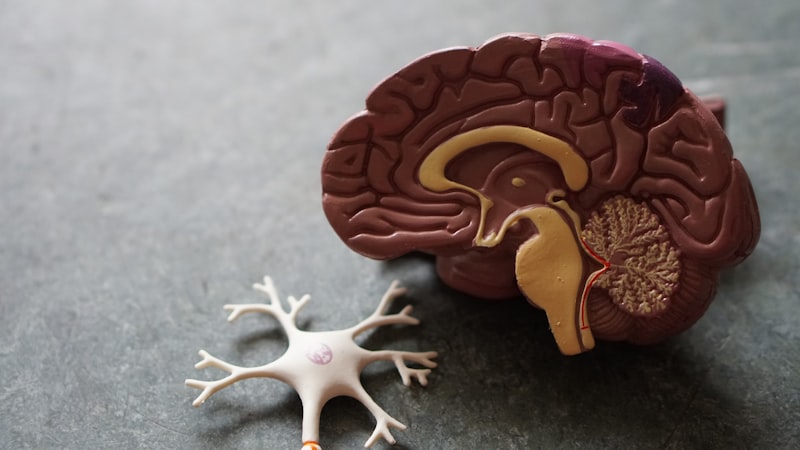
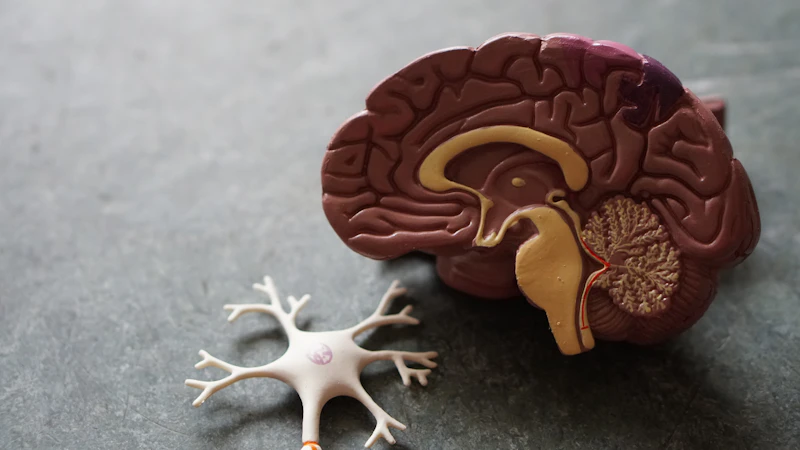
Abstract visualization of human brain activity and neural pathways

Now, here is where the plot thickens. When the body notices a weak spot in a blood vessel, it doesn't just sit there; it tries to fix it. This process is called fibrosis. Usually, fibrosis is the hero of the story—it is the same process that creates a sturdy scar when you scrape your knee. In the context of a brain aneurysm, the body tries to "patch" the thinning wall with a thick layer of cellular glue and fibers. For a long time, researchers thought that more scarring was always a good thing, assuming it was like adding extra layers of duct tape to a leaky hose. But as it turns out, the body’s repair job can sometimes be a bit of a "frenemy."

Recent deep dives into the cellular makeup of these aneurysms have revealed that not all scars are created equal. Some patches are incredibly tough and resilient, holding the aneurysm steady for decades. However, in other cases, the "duct tape" becomes brittle and stiff. Instead of making the vessel stronger, this wonky repair job makes the wall more vulnerable to the relentless pounding of blood flow. It is a bit like trying to fix a rubber balloon with a piece of dry crackers; eventually, the lack of flexibility causes the whole thing to crack under pressure. This vulnerability is what researchers are now frantically trying to map out, looking for the specific cellular signals that tell a repair crew to do a good job versus a sloppy one.

To understand this better, scientists have been looking at the "Extracellular Matrix," which sounds like a sci-fi movie but is actually just the scaffolding that holds our cells together. In a healthy blood vessel, this scaffolding is bouncy and strong. In a "vulnerable" aneurysm, the scaffolding looks like a messy, disorganized junk pile. The smooth muscle cells, which should be the guardians of the vessel wall, start to change their identity. They stop acting like builders and start acting like demolition experts, releasing enzymes that actually chew away at the very support structures they are supposed to be protecting. It is a classic case of a cellular identity crisis leading to a structural catastrophe.

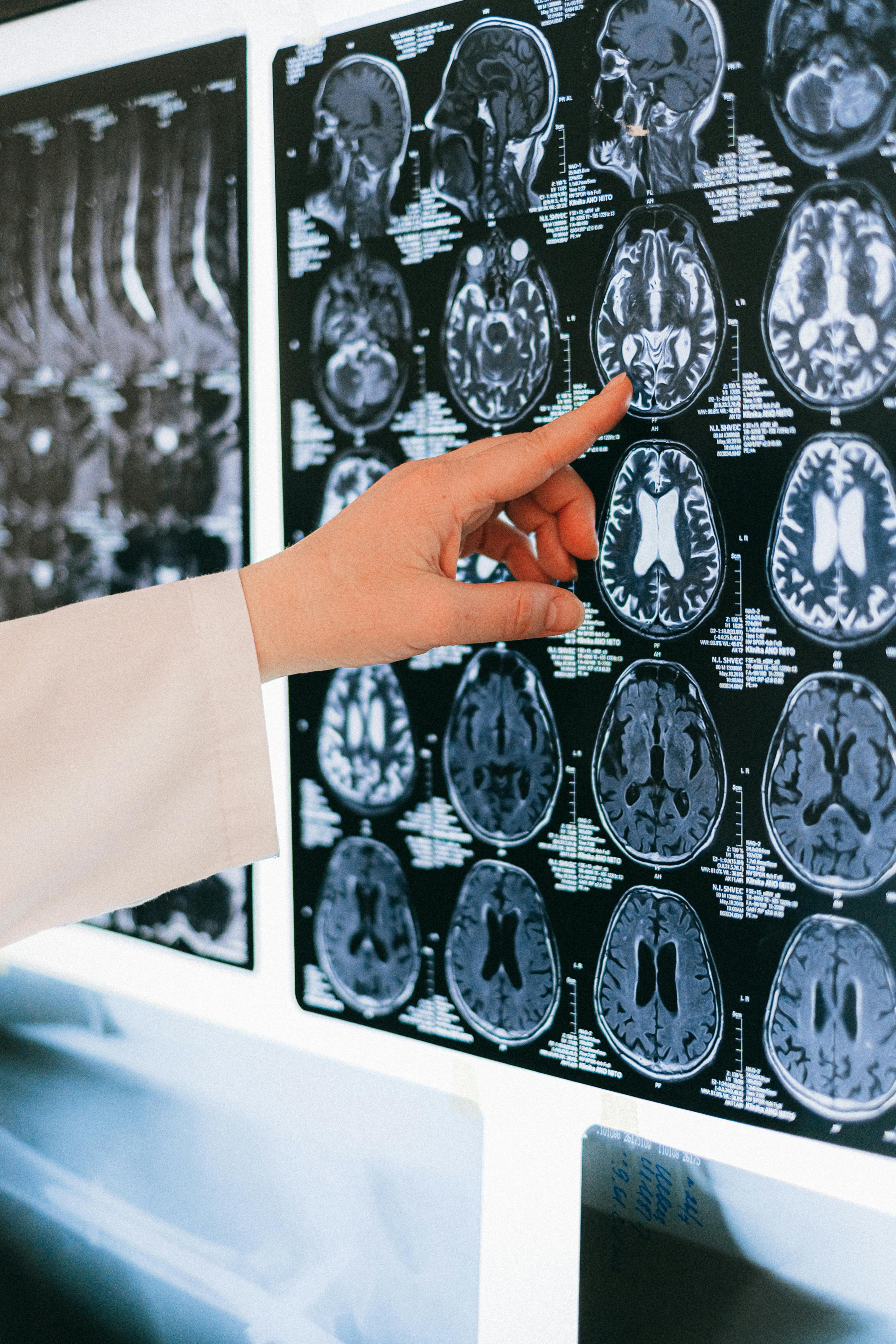
The big goal of all this microscopic snooping is to find a way to predict which aneurysms are "the quiet ones" and which ones are "the troublemakers." Currently, doctors often have to make tough calls based on the size and shape of the balloon. But size isn't everything. A small, brittle balloon can be much more dangerous than a large, well-reinforced one. By understanding the specific dance of fibrosis and the unique "fingerprints" of the cells involved, the medical world is moving toward a future where we can look at a brain scan and know exactly how much "duct tape" is holding things together.

In the end, it all comes down to the incredible resilience of the human body. Even when things go slightly sideways and a tiny balloon pops up in the middle of our most important organ, our cells are working overtime to keep the peace. The more we learn about these microscopic construction crews and their occasionally questionable repair methods, the closer we get to ensuring that every "plumbing" issue in the brain can be handled with precision and ease. So, the next time you think about your brain, give a little nod of thanks to the hardworking cells that are constantly patching, reinforcing, and navigating the high-pressure world inside your head.

Monday, 22 June 2026

Amazing News! Kelsey Martin Earns the Prestigious Kavli Prize for Her Incredible Neuroscience Work!

Imagine for a moment that your brain is a sprawling, neon-lit metropolis, pulsing with more electrical activity than a sold-out music festival. In this biological city, billions of tiny messengers are constantly sprinting through alleyways, sending postcards, and shouting news across the rooftops. Now, imagine someone cracked the code on how those messages actually travel from the distant suburbs of your mind all the way to the high-security vault in the city center to be stored forever. That is exactly what Dr. Kelsey Martin did, and she just won the neuroscience version of a shimmering gold medal for it!

The world of science is currently throwing a massive celebratory party for Dr. Martin, who was recently named a laureate of the prestigious Kavli Prize in Neuroscience. If the Nobel Prize is the seasoned grandparent of awards, the Kavli Prize is the cool, high-tech cousin that focuses on the biggest mysteries of the universe, the nano-world, and the brain. Dr. Martin didn’t just win for showing up; she won because she figured out one of the most enchanting tricks the brain has up its sleeve: how a fleeting moment becomes a permanent memory.

Stylized colorful brain and neural networks

To understand why this is such a big deal, we have to look at how a neuron is built. Think of a neuron like a very long, very skinny tree. The roots are the synapses, where the cell talks to its neighbors, and the trunk is the long fiber that leads to the nucleus, which is the "brain" of the cell. Usually, what happens at the roots stays at the roots. But when you experience something truly unforgettable—like your first rollercoaster ride or the smell of fresh cookies—those roots need to send a message all the way back to the trunk to say, "Hey! We need to remember this! Change the blueprints!"

Dr. Martin’s groundbreaking work revealed that there is a specialized "postal service" within the cell. She discovered that when a synapse is stimulated, certain proteins get a literal "go-bag" ready and travel all the way from the synapse to the nucleus. This journey is massive on a cellular scale, like a person walking from New York to Los Angeles just to deliver a single letter. Once they arrive at the nucleus, these messenger proteins tell the cell to turn on specific genes, which then create new proteins that travel all the way back to the original synapse to strengthen it. It is a beautiful, recursive loop of biological storytelling.

Before her work, scientists weren't entirely sure how the nucleus knew which of its thousands of synapses was being poked or prodded. It’s like having a house with ten thousand lights and knowing exactly which bulb to change when one flickers. Her research gave us a front-row seat to the molecular marathon that allows our brains to be flexible, adaptable, and—most importantly—capable of learning. Without this process, every day would feel like the first day of your life; we’d be stuck in a permanent "wait, where am I?" loop.

The Kavli Prize committee was clearly dazzled by this discovery, but Dr. Martin’s journey doesn’t stop at the laboratory bench. While she is a world-class explorer of the microscopic world, she also plays a massive role in the grander scientific community. Currently, she leads the neuroscience and autism research efforts at a major foundation, where she helps steer the ship for the next generation of brain explorers. She’s essentially a scientist, a mentor, and a visionary all rolled into one, making her the ultimate MVP of the neural world.

Winning this prize is about more than just a fancy trophy or the substantial financial reward (though the million-dollar prize shared with her fellow laureates is certainly a nice perk!). It’s about the recognition that the brain is the ultimate frontier. Dr. Martin shares this honor with other brilliant minds who have mapped the visual centers of the brain and identified how we recognize faces, creating a "dream team" of researchers who are slowly but surely drawing the map of the human experience.

So, the next time you remember a lyric to a song you haven't heard in ten years, or you successfully recall where you left your keys (for once!), take a tiny moment to thank the molecular marathon runners in your head. Thanks to the curiosity and brilliance of Dr. Kelsey Martin, we finally understand how those little protein athletes make the trek to ensure your life’s highlights are etched into the stars of your subconscious. It’s a wild, wonderful, and incredibly busy world inside our skulls, and we’ve just given one of its best mapmakers the standing ovation she deserves.

As we look toward the future, the work of pioneers like Dr. Martin reminds us that we are still in the "Age of Discovery" when it comes to our own minds. Every breakthrough like this opens a door to understanding how we learn, how we grow, and how we can help people when those memory pathways don't work quite right. It’s a victory for science, a victory for curiosity, and a reminder that there is nothing more spectacular than the three-pound universe sitting right behind your eyes.

Saturday, 20 June 2026

Discover the Incredible Future of Human Memory and Artificial Intelligence Right Now!

Imagine your brain is a giant, cluttered attic filled with dusty boxes, old holiday photos, and that one specific song lyric from 1998 that you can’t seem to shake. Now, imagine a sleek, shiny robot trying to organize that attic using nothing but a complex series of math equations and a very fast calculator. That is essentially the wild, wonderful, and slightly brain-melting world where neuroscience meets artificial intelligence. Recently, some of the smartest people on the planet gathered to chat about how our biological "gray matter" and the silicon chips in our pockets are starting to act more like distant cousins than total strangers.

Memory is a bit of a trickster. For us humans, remembering isn't like hitting "play" on a video file. Instead, it’s more like a group of friends trying to reconstruct a story after a few too many sodas; everyone remembers a different detail, and the story changes just a little bit every time it’s told. Our neurons—those tiny, sparky cells in our heads—are constantly reaching out and shaking hands with each other, forming connections that strengthen or wither depending on how much we use them. It’s a gooey, salty, and incredibly efficient system that allows us to recognize a childhood friend's face in a split second or remember that fire is hot without having to touch it twice.

Abstract digital representation of a human brain and artificial neural networks

Enter the world of Artificial Intelligence. Modern AI doesn't exactly "remember" things in the way we do. It doesn't have a nostalgic moment over a digital cookie. Instead, it uses layers upon layers of artificial neurons to find patterns in massive piles of data. If you show an AI ten million pictures of cats, it becomes a world-class expert at spotting a whisker, but it doesn't actually know what a cat feels like or why they insist on knocking glasses off tables. The big debate right now is whether we can teach these machines to store information more like we do—selectively, contextually, and with a bit more "soul."

One of the funniest things about our brains is how good we are at forgetting. You might think forgetting is a flaw, like a leaky bucket, but scientists argue it’s actually a superpower. If we remembered every single blade of grass we ever saw, our brains would be too crowded to function. We are experts at filtering out the junk to keep the gold. Computers, on the other hand, suffer from something called "catastrophic forgetting." When you try to teach a robot a new trick, it sometimes completely deletes the old one. It’s like learning how to bake a cake and suddenly forgetting how to ride a bike. Solving this "oops, I deleted my personality" problem is one of the biggest hurdles in making AI truly smart.

The conversation gets even deeper when we talk about the "where" and "how" of it all. In our heads, memory is scattered all over the place, tucked into different nooks and crannies of the cortex. In a computer, memory is usually stored in a very specific place, separate from where the actual "thinking" happens. This creates a bit of a traffic jam. Scientists are now looking at "neuromorphic" computing—basically building computers that look and act more like biological brains—to see if we can make technology that is just as zippy and energy-efficient as the three-pound lump of jelly between our ears.

But wait, it’s not just about making better robots. By studying how AI mimics memory, we are actually learning more about ourselves. Sometimes, the math used to train a digital network helps researchers understand why a specific part of the human brain reacts a certain way to a new experience. It’s a two-way street: the brain inspires the machine, and the machine helps us decode the mystery of the brain. It’s like looking into a digital mirror and finally realizing why you can never remember where you put your car keys but can still remember the cheat codes for a video game you played twenty years ago.

There is also the spicy topic of ethics. If we eventually build a machine that remembers things exactly like a human, does it deserve a weekend off? Does it have rights? And on the flip side, if we can "upload" or enhance our own memories using tech, are we still us, or are we becoming part-smartphone? These aren't just plots for sci-fi movies anymore; they are the actual questions being yelled across laboratory benches. The blend of silicon and synapses is blurring the line between "who" and "what," making the future feel both exciting and a little bit like a fever dream.

Ultimately, the marriage of neuroscience and AI is about connection. It's about bridging the gap between the biological wonders of evolution and the lightning-fast potential of technology. Whether we end up with robots that can dream or simply smartphones that actually understand what we're looking for, the journey into the mind is the ultimate frontier. We are living in a time where the "ghost in the machine" and the "cells in the skull" are finally starting to speak the same language, and honestly, it’s a conversation you don’t want to forget.

So, the next time you walk into a room and forget why you went in there, don't feel bad. Just tell yourself your biological storage is optimizing its cache, and be glad you aren't a robot who might accidentally delete your entire childhood just to learn how to make a latte. The future of memory is bright, weird, and probably stored in a cloud made of both neurons and transistors. It’s a brave new world out there, so keep your synapses firing and your software updated!

Thursday, 18 June 2026

Amazing Breakthrough Reveals How Humans Master Mind Control Through Incredible Brain Geometry!

Have you ever sat on your couch, staring intensely at the TV remote just out of reach, wishing you could make it fly into your hand using nothing but the sheer power of your mind? Well, put down the magic wand and stop squinting, because science is actually figuring out how to turn us all into low-key telekinetic wizards. Researchers have been diving deep into the world of Brain-Computer Interfaces, or BCIs, and they’ve discovered that learning to control a computer with your thoughts is a lot like learning a funky new dance routine—only the dance floor is inside your skull.

For a long time, the idea of hooking your brain up to a machine involved some pretty intimidating surgery. Nobody really wants a USB port installed behind their ear unless they’re auditioning for a sci-fi blockbuster. Thankfully, the latest breakthroughs focus on non-invasive tech. This means instead of surgery, you get to wear a very stylish, albeit slightly dorky-looking, cap covered in sensors. These sensors listen to the electrical chatter of your neurons, trying to translate the chaotic "party noise" of your brain into instructions a computer can actually understand. It’s like trying to hear a single person whispering in a stadium full of cheering fans, but the fans are all your thoughts about what’s for dinner or that embarrassing thing you said in third grade.

The real secret sauce in this mental magic trick is something called manifold geometry. Now, don’t let the math-heavy name scare you away! Imagine your brain’s activity as a giant, swirling cloud of confetti. If you just look at the whole cloud, it looks like a mess. But manifold geometry is like finding a hidden, invisible slide inside that cloud. Even though the confetti is flying everywhere, it mostly stays on the slide. Scientists have found that our brain activity follows these specific "shapes" or pathways. When we try to learn a new skill—like moving a cursor on a screen just by thinking about it—our brain doesn't just wander aimlessly. It tries to find the most efficient "groove" in its own internal landscape.

When someone first puts on a BCI cap, they usually struggle. They might think "move right," and the cursor just sits there or jitters around like it’s had too much espresso. This is because the brain and the computer haven't learned each other's "language" yet. It’s a two-way street: the computer is trying to decode the brain, and the brain is trying to figure out which specific thoughts make the computer happy. This process used to be slow and frustrating, but by understanding the geometry of how our neurons fire, researchers are finding ways to make that learning curve a lot smoother. It’s like giving the brain a map of the shortcut instead of making it wander through the woods.

A glowing representation of neural pathways and digital connections

Think of it like learning to play a video game with a controller you’ve never seen before. At first, you’re pressing every button, hoping for the best. But eventually, your thumbs develop muscle memory. In the world of BCIs, your brain is developing "neural memory." By looking at the manifold geometry, scientists can see the brain actually "shaping" its activity to fit the requirements of the machine. It’s a beautiful, invisible architecture being built in real-time. The brain isn't just sending signals; it’s literally reorganizing its internal rhythm to become a better pilot for the digital world.

What makes this so exciting is that it’s not just about playing games or moving cursors. This technology is a game-changer for people who can't move their limbs or speak. By tapping into these natural geometric pathways of the mind, we can create tools that feel more like a natural extension of the body rather than a clunky piece of hardware. Imagine a prosthetic arm that doesn't just move when you tell it to, but moves with the same grace and intuition as a biological one, all because the computer and the brain are dancing on the same geometric wavelength.

The study of these mental "shapes" also tells us a lot about how we learn in general. Whether you're learning to play the piano, speak a new language, or pilot a drone with your forehead, your brain is essentially performing a massive optimization project. It's looking for the easiest path through the manifold. By understanding these paths, we might eventually find ways to help people learn everything faster. We’re talking about "Matrix-style" learning, though maybe without the giant needles and the leather outfits. We are unlocking the user manual for the most complex computer in the known universe: the one sitting right between our ears.

So, next time you see someone wearing a cap with a bunch of wires sticking out of it, don't laugh! They might just be the pioneer of a new era where our thoughts and our tech are perfectly in sync. We are moving toward a future where the boundary between "us" and "the machine" becomes a beautiful, geometric blur. It turns out that the key to mastering the digital world isn't just better code or faster processors—it's understanding the elegant, invisible shapes of our own thoughts. Who knew math and meditation could combine to give us actual superpowers? The "Force" might not be real, but manifold geometry is, and that’s even cooler.

In the end, it’s all about connection. Our brains are incredibly adaptable, always looking for new ways to interact with the world around us. By bridging the gap between biological neurons and silicon chips through the clever use of geometry, we’re opening a door that was once thought to be permanently locked. We’re not just teaching computers how to understand us; we’re learning how to understand ourselves on a level we never imagined. So keep dreaming big, because soon enough, your brain might just have the "blueprints" it needs to turn those dreams into digital reality.

Monday, 15 June 2026

Amazing Discovery Proves Mice Can Get Sleep Benefits While Staying Fully Wide Awake!

Imagine you are at a high-stakes meeting, or perhaps trying to win a particularly intense game of tag, and suddenly your brain decides it is time for a quick siesta. Not a full-blown, head-on-the-desk snore-fest, but a tiny, microscopic pause. For a long time, we thought being awake and being asleep were like two different rooms in a house—you are either in one or the other. But it turns out, our brains might be much more like a dimmer switch than a simple light toggle. Recent observations of our furry mouse friends have shown that the brain has a secret way to stay sharp: it takes tiny "micro-naps" while the rest of the body is busy exploring the world.

In this bustling laboratory of life, the brain’s neurons are like a team of hyperactive office workers. Usually, they are all typing away, shouting across desks, and drinking endless cups of metaphorical coffee. This is what experts call the "on" state. But every now and then, a whole section of the office just stops. They put down their pens, turn off their monitors, and stare into space for a fraction of a second. This is the "off" state. Until recently, we thought these "off" periods were strictly reserved for the deep, quiet hours of the night when we are tucked safely in our beds. However, it looks like these tiny pauses are actually happening while we are wide awake and going about our business, and they serve a very important purpose.

To figure this out, researchers had to get a little creative with their mouse companions. They discovered that by gently nudging certain parts of the cortex—the brain's very own thinking cap—they could trigger these "off" periods on demand. Imagine if you could tell your brain, "Hey, Section 4B needs a five-minute break," while the rest of you continues to navigate a grocery store. When these mice had their brain cells "turned off" for these brief flickers, something incredible happened. Even though they were technically awake and moving around, their brains were performing the deep-cleaning and maintenance tasks that usually only happen during a solid eight hours of shut-eye.

Think of your brain like a busy kitchen in a five-star restaurant. During the "awake" dinner rush, there is no time to mop the floors or organize the spice rack. You just have to keep the orders moving! Normally, the cleaning crew only comes in after the "Closed" sign is flipped and the lights go out. But these clever little "off" periods allow the cleaning crew to sneak in and scrub one small counter at a time while the chefs are still cooking at the other stations. This means the brain stays fresher for longer periods and does not get overwhelmed by the clutter of a long day of thinking, feeling, and processing.

A cute mouse looking curious

This discovery flips our understanding of rest on its head. If we can fulfill the functions of sleep while we are still moving around, it opens up a whole world of possibilities. Could we eventually learn to optimize our own "off" periods to stay focused during a long study session? Could we beat that mid-afternoon slump not with more caffeine, but by letting tiny slivers of our brain take turns napping? The mice certainly seem to have the hang of it. They were able to perform their little tasks just fine, all while their neurons were taking these high-speed power naps. It is like a relay race where one runner rests while the others keep the baton moving forward.

Of course, this does not mean we should all start trying to sleep-walk through our lives. These "off" periods are very specific and very fast—blink and you would miss them. If too many parts of the brain go "off" at once, you would probably lose your train of thought or walk into a wall. But the fact that these states can be induced and managed shows that the brain has a built-in "refresh button" that it uses to keep itself from crashing like an old computer. It is a delicate dance between being fully present and letting the "background apps" of the mind do their necessary updates and security scans.

There is also the question of what this means for the future of productivity and health. We live in a world that never seems to sleep, and we are always looking for ways to get more out of our twenty-four hours. Understanding how the brain squeezes in its chores during the day might help us help people who struggle with sleep disorders. Instead of trying to force a full night’s rest all at once, maybe the secret lies in these tiny, rhythmic pauses that keep the brain’s gears greased and ready for action. It is the difference between a massive, exhausting spring cleaning and just tidying up as you go through the day.

In the end, it turns out that being "awake" is a much noisier and more complex state than we ever imagined. Our brains are constantly flickering, pulsing, and taking micro-breaks to ensure that we do not burn out. The next time you find yourself daydreaming for a split second or feeling a brief wave of calm wash over you, do not feel guilty about losing focus. It might just be your brain’s way of taking a tiny, invisible nap so you can get back to being your awesome, energetic self. Science is proving that even in the busiest of minds, there is always room for a little bit of quiet, even if it only lasts for a heartbeat.

By studying how these on and off periods work, we are learning that sleep isn't just a destination we reach at night, but a vital process that weaves itself through every hour of our lives. We are more than just "on" or "off"; we are a beautiful, flickering symphony of activity and rest, working together to keep the music playing. So, here is to the tiny naps and the quiet moments—your brain certainly seems to think they are the most important part of the day!

Saturday, 13 June 2026

Discover Amazing Neuroscience Secrets to Unlock Unlimited Energy and Feel Truly Unstoppable Today!

Ever feel like you’ve been hit by a metaphorical truck of tiredness, even though the most strenuous thing you did today was choose which socks to wear? We’ve all been there—slumped on the couch, staring at the wall, convinced that our limbs have been replaced by heavy bags of wet cement. You might think your muscles are waving a white flag, but science has a bit of a secret to share: your body is usually lying to you. It turns out, that "I can’t take another step" feeling is mostly a high-stakes drama production staged by your brain.

Think of your brain as an overprotective parent who is constantly worried you’re going to run out of juice. Long before your muscles actually give up, your brain starts screaming, "Abort mission! Nap time is mandatory!" This is what neuroscientists call the "central governor" theory. Your gray matter is essentially a grumpy accountant sitting in a control room, constantly calculating whether the energy you’re spending is worth the reward you’re getting. If the accountant decides the payout is too low, it sends out signals of exhaustion to make you stop, even if your "fuel tank" is still a third full.

A person looking peacefully exhausted yet relaxed

The star of this internal soap opera is a little area called the Anterior Cingulate Cortex, or the ACC. This part of your brain is the ultimate decision-maker. It looks at the task in front of you—say, finishing a work report or running that last mile—and asks, "Is this worth the effort?" If the ACC isn’t feeling particularly inspired, it stops releasing the "go-go juice" known as dopamine. Without that hit of motivation, everything feels ten times harder. You aren't actually physically incapable; you’re just experiencing a temporary dopamine drought. It’s like trying to run a luxury sports car on diluted lemonade.

But wait, it gets even more psychological! There is a sneaky molecule called adenosine that builds up in your brain the longer you stay awake. Adenosine is basically the brain’s way of keeping track of your "active hours." When it binds to certain receptors, it makes you feel drowsy and foggy. While caffeine famously blocks these receptors (telling adenosine to "talk to the hand"), the feeling of being "wiped out" is often just your brain’s way of saying it wants to run a disk cleanup and restart. It’s not your legs that are tired; it’s your neural processors getting a bit overheated from too many open tabs.

The good news is that because exhaustion is largely a mental construct, you can actually hack your way out of it. Since your brain is playing a game of "Effort vs. Reward," you just need to tilt the scales. This is why you can feel completely drained at the end of a long day, but suddenly find a massive burst of energy the moment a friend suggests getting pizza or you hear your favorite high-tempo song. You didn't magically grow new muscles in those five seconds; you just tricked your ACC into thinking the reward was finally worth the energy expenditure.

Another fun way to bypass the "central governor" is through the power of positive self-talk. It sounds a bit cheesy, but telling yourself "I’ve got this" or "Just five more minutes" actually changes the neurochemical signals being sent to your body. When you give yourself a pep talk, you’re essentially arguing with that grumpy internal accountant. You’re providing evidence that you aren't actually in danger of collapsing, which encourages the brain to release a little more of that sweet, sweet dopamine to keep you moving.

Social connection is another secret weapon against the "fuzzies." Humans are social creatures, and being around people we like actually reduces the perceived effort of a task. It’s the reason why a grueling workout feels easier with a buddy or why a long drive doesn't seem so bad if you’re chatting with a passenger. Your brain feels safer and more rewarded in a "pack," so it lowers the alarm bells of exhaustion. In short, your friends are basically a human-shaped battery pack for your mind.

So, the next time you feel like you're running on empty, remember that your brain is likely just being a bit of a drama queen. It’s trying to protect you, sure, but it’s also being incredibly conservative with your energy reserves. You have more "hidden" power than you realize. Whether it’s through a change in scenery, a bit of music, or just a shift in how you think about the task, you have the tools to override the system. You aren't a broken machine; you're just a very sophisticated computer that occasionally needs a little bit of convincing to keep the screen from going dark.

In the grand scheme of things, understanding that fatigue is a sensation rather than a physical limit is incredibly empowering. It means you are the pilot, not just the passenger. While we should always listen to our bodies and get plenty of rest, knowing that we can "negotiate" with our tiredness allows us to push through the mid-afternoon slump with a bit more grace and a lot more humor. So, go ahead and tell your brain to take a back seat for a while—you’ve still got plenty of miles left in the tank!

Thursday, 11 June 2026

Amazing New Discovery Unveils the Hidden Geometric Map of Emotions in the Brain!

Imagine your brain is a giant, glowing theme park that never sleeps. There are high-speed roller coasters for when you are excited, spooky haunted houses for when you are scared, and cozy cotton candy stands for when you are feeling perfectly content. Deep inside this mental Disneyland, tucked away like a secret VIP lounge, is a tiny, almond-shaped control room called the Basolateral Amygdala, or the BLA for short. For a long time, people thought this little nugget was just a simple panic button that screamed whenever something went wrong. But it turns out the BLA is actually a high-tech choreographer that organizes our feelings into beautiful, invisible shapes!

Instead of just being a messy pile of tangled wires, our brains use something called representational geometry to keep track of our moods. Now, do not let that big word scare you away—this is not the kind of geometry where you have to calculate the area of a triangle while sweating over a wooden desk. Think of it more like a 3D dance floor where every emotion has its own signature move and its own specific spot to hang out. Researchers have been peeking into this microscopic ballroom and discovered that the way our brains map out feelings like "Yum, a snack!" and "Oh no, a scary shadow!" is way more organized than we ever imagined.

When you experience something—say, you find a twenty-dollar bill in your old jeans—a specific group of neurons in your BLA starts a synchronized dance. If you then see a giant, grumpy dog barking at you, a different group of neurons starts their own routine. What is truly mind-blowing is that these groups of neurons do not just fire randomly. They create a geometric structure in the brain’s "thought space." It is as if the brain is building a 3D map where "happy" is in the north, "scared" is in the south, and "excited" is somewhere floating in the clouds above. This map helps the rest of your brain instantly understand exactly what kind of vibe you are dealing with.

A colorful and artistic representation of a human brain with glowing neural pathways

This discovery is like finding the secret blueprints to a very complicated machine. By looking at the "shape" of these neural patterns, scientists can actually see how the brain distinguishes between a "high-stakes" situation and something that is just a little bit "meh." It turns out that the brain is a bit of a drama queen—it likes to keep the patterns for "really good" and "really bad" things as far apart as possible in this geometric space. This wide distance makes it easier for your body to decide whether it should celebrate with a happy dance or run away as fast as your legs can carry you.

But wait, it gets even cooler! The researchers found that these geometric patterns are not just fixed in place like a frozen statue. They can shift and change based on what you learn. If you spend your whole life thinking spiders are terrifying, they will have a very specific, jagged "fear shape" in your BLA. But if you spend time learning about how cool and helpful spiders are, that shape might actually start to morph and drift closer to the "curiosity" or "neutral" zone. Your brain is essentially a 3D artist, constantly sculpting and refining the shapes of your emotions as you go through life.

This internal geometry also helps explain why sometimes our feelings get a little bit tangled. If two different emotions have shapes that are too close together, your brain might get confused. This is why some people cry when they are extremely happy or get angry when they are actually just really scared. Their emotional map has a few overlapping territories! Understanding these shapes could eventually help us find better ways to help people whose "fear shapes" have become too big or too loud, helping them gently reshape their inner world into something a bit more peaceful.

So, the next time you feel a rush of joy or a tingle of nerves, just imagine that little almond in your head working hard to plot a point on its magnificent, invisible map. You aren't just "feeling" things; you are creating a complex, multi-dimensional masterpiece of neural geometry. Your brain isn't just a computer; it is a galaxy of shapes, colors, and patterns, all dancing together to make you exactly who you are. Who knew that math and feelings could be such a perfect match? It turns out we are all walking, talking geometric wonders, lit up from the inside by the most sophisticated light show in the universe.

In the grand scheme of things, this research reminds us that there is a beautiful logic to our most chaotic feelings. Even when we feel like an emotional wreck, our BLA is back there with a ruler and a compass, making sure every feeling has its place. It is a comforting thought: no matter how wild life gets, your brain has a plan, a map, and a very fancy shape for everything you go through. So, keep exploring, keep learning, and let your inner geometry grow into the most vibrant, expansive map it can possibly be!

Tuesday, 9 June 2026

Finally Master Anything Faster With the Most Powerful Science-Backed Learning Secret Ever!

Ever feel like your brain is a leaky bucket? You spend hours pouring in facts, dates, and names, only to find that by the time you actually need them, your mental reservoir is bone dry. We’ve all been there, staring blankly at a test or a coworker, praying that the information will magically reappear. For decades, we were told that the best way to learn was to simply do it more. Read the book again. Highlight the important bits in neon yellow. Listen to the lecture on repeat. But it turns out, we’ve been doing it all wrong. Your brain isn't a sponge; it's more like a muscle that needs a very specific kind of workout to get strong.

Imagine you’re trying to build a path through a dense, overgrown jungle. If you just fly over the jungle in a helicopter looking at the map, you haven't actually built a path. That’s what re-reading your notes is like. It’s passive, it’s easy, and it gives you a false sense of security. You feel like you know the material because it looks familiar, but the moment you’re on the ground without the map, you’re lost. To actually make that path permanent, you have to get out your machete and hack through the vines yourself. In the world of neuroscience, that "hacking through the vines" is called retrieval practice, and it is the absolute undisputed heavyweight champion of learning.

Bright lightbulb and creative brain concept

The secret sauce to making anything stick is surprisingly simple, though it might feel a little painful at first: you have to try to remember it before you’re ready. Instead of looking at the answer, you force your brain to go hunting for it in the dark. This "struggle" is exactly where the magic happens. Every time you pull a piece of information out of your memory, you are physically changing your brain. You are strengthening the neural pathways and telling your gray matter, "Hey, this stuff is important! Keep it handy!"

Think about it like this: if you want to remember where you parked your car in a giant mall lot, you don't walk back to the car five times to check on it. Instead, you walk away and then, twenty minutes later, you stop and ask yourself, "Wait, where did I park?" That split second of panic and the subsequent effort to visualize the row and the pillar is what actually locks the location into your mind. That is retrieval in action. Scientists have found that students who test themselves on material—even if they fail the test initially—perform significantly better in the long run than those who just study the material over and over again. It’s the difference between being a spectator and being the star player.

So, how do you turn your brain into a high-performance memory machine? First, ditch the highlighters. They are the "empty calories" of the learning world. They make your pages look pretty and colorful, but they don't do much for your long-term retention. Instead, try the "Blank Sheet Method." After you read a chapter or finish a meeting, put everything away and grab a blank piece of paper. Write down everything you can remember. Everything. Even if it feels messy or incomplete. This forces your brain to engage in high-intensity retrieval. It’s like a sprint for your synapses.

Another fantastic trick is the "Grandma Test." Try to explain a complex concept you’ve just learned to someone else—or even to an imaginary person—as if they are five years old. If you hit a wall and can’t explain a certain part, that’s great! That "wall" shows you exactly where the gaps in your knowledge are. Most people fear the wall, but in the world of smart learning, the wall is your best friend. It tells you exactly what you need to go back and look at, saving you from wasting time on things you already know.

Flashcards are also a classic for a reason, but only if you use them correctly. The trick isn't to look at the front and immediately flip to the back. You have to sit there and let it be uncomfortable for a few seconds. Dig for the answer. Sweat a little bit. That tiny moment of mental "ugh" is the sound of your brain building a bridge. Once you’ve successfully retrieved the info, you can move on, but don't retire the card too soon. Space it out. Check back in a few days, then a week, then a month. This is called spaced repetition, and it’s the ultimate partner to retrieval practice.

It’s also important to realize that making mistakes isn't just okay—it’s actually necessary. When you try to remember something and get it wrong, your brain gets a little jolt of "Wait, that’s not right!" This primes your mind to pay even closer attention when you finally see the correct answer. It creates a "knowledge shaped hole" that is ready to be filled. So, don't be afraid to quiz yourself early and often, even if you feel like you barely know the topic yet. The earlier you start the retrieval process, the deeper those roots will grow.

In the end, learning shouldn't feel like a relaxing stroll; it should feel a bit like a hike. It requires effort, intention, and a bit of a sweat. But the view from the top—having a brain that actually holds onto the things you give it—is well worth the climb. So the next time you want to master a new skill, learn a language, or just remember someone’s name at a party, don’t just repeat it. Challenge yourself to find it. Stop looking for the map, pick up your mental machete, and start hacking your way toward a sharper, stickier memory. Your brain will thank you for the workout!

Saturday, 6 June 2026

Huge News! FAU’s Brilliant Professor Chosen to Chair Prestigious International Neuroscience Conference!

Deep in the heart of the Sunshine State, where the palm trees sway and the ocean breeze whispers secrets of the deep, a different kind of wave is making a massive splash. It isn’t a tidal wave or even a heat wave; it’s a brain wave! Florida Atlantic University is currently buzzing with an intellectual energy so high you could practically use it to power a small city. The cause of all this excitement? One of their very own brilliant faculty members has been chosen to take the helm of a prestigious international neuroscience conference. This is like being named the captain of the world’s smartest ship, and the destination is the very center of human consciousness.

Imagine, if you will, a gathering of the most curious minds on the planet. We aren't talking about a boring meeting with stale coffee and endless slide shows. No, this is more like the Super Bowl of the mind, a "Brain-Con" where the world’s leading experts converge to talk about the most complicated, mysterious, and downright coolest object in the known universe: the human brain. This three-pound lump of squishy, grey matter is the ultimate frontier, and our protagonist from FAU is going to be the one standing at the front of the room, guiding the global conversation. It’s a huge win for the university and a testament to the incredible work happening right there in their labs.

Vibrant abstract neural network representation

The brain is essentially a biological supercomputer, but way more efficient and capable of feeling "all the feels." While most of us are busy trying to decide what to have for lunch or wondering where we left our sunglasses, these scientists are diving deep into the microscopic world of neurons and neurotransmitters. They are looking at how billions of tiny cells fire off electrical signals faster than a group chat on a Friday night. By chairing this massive international event, the FAU lead is helping to orchestrate a global symphony of ideas. Researchers from every corner of the globe will be sharing their latest breakthroughs, from how we form memories of our first birthday to the way our brains process the rhythm of our favorite songs.

Think of the brain as a giant, bustling metropolis. The neurons are the inhabitants, and they are constantly sending messages to one another. Sometimes the messages are simple, like "Hey, move that thumb!" and other times they are incredibly complex, like "Let's solve this advanced calculus problem while simultaneously feeling a sense of existential wonder." When things go right, it’s a masterpiece of coordination. But when things go a little sideways, that’s where the scientists come in. This upcoming conference will tackle the heavy hitters—looking for ways to fix the "glitches" in the system, such as mood disorders, memory loss, and neurological challenges that affect millions of people every single day.

What makes this role so special is the spirit of collaboration. Science isn't just about one person staring into a microscope in a dark room; it's a team sport. By chairing this event, the FAU representative is building bridges between laboratories in Tokyo, London, Berlin, and beyond. They are creating a space where a wild idea sparked in a lab in Florida can catch fire and become a life-changing treatment in a clinic halfway across the world. It’s about taking those "eureka" moments and turning them into a chorus of discovery. The energy is infectious, and it’s a reminder that we are living in a golden age of brain exploration.

For the students and fellow researchers at Florida Atlantic University, this news is like a shot of pure dopamine. It proves that you don't have to be in a snowy ivy-league basement to change the world; you can do it right where the sun shines brightest. It sets a standard for excellence and shows the next generation of "brainiacs" that the sky—or rather, the cranium—is the limit. There is a sense of pride rippling through the hallways, as everyone realizes that their community is at the very epicenter of mapping out the future of human health. It's a celebration of curiosity, hard work, and the sheer joy of figuring out how things work.

So, as the conference date approaches, the excitement continues to build. There will be intense debates, groundbreaking data reveals, and likely a few "mind-blown" emojis shared among the attendees. Leading such a high-stakes, high-intellect group is no small feat, but the FAU faculty member is ready to show the world that they have the vision and the passion to lead the charge. It’s a moment to celebrate the incredible power of the human spirit to investigate itself. After all, what could be more poetic than a brain trying to understand a brain? It’s the ultimate meta-adventure, and FAU is leading the way with a smile and a whole lot of scientific "pizzazz."

In the end, this isn't just about titles or prestigious chairs. It’s about the hope that comes from understanding. Every time these experts get together to share their maps of the mind, we get one step closer to solving the puzzles that have baffled humanity for centuries. Whether it's unlocking the secrets of sleep, understanding the roots of creativity, or finding better ways to keep our minds sharp as we age, the work led by this FAU standout is paving the road for a brighter, smarter, and more connected future. So, here’s to the thinkers, the explorers, and the leaders who remind us that the most amazing thing we will ever own is the one currently reading these words.

Thursday, 4 June 2026

Revolutionary Scientific Breakthrough! The Brain's Waste System Is Finally Mapped to Defeat Alzheimer's!

Imagine for a moment that your brain is the most exclusive, high-energy nightclub in the entire universe. Inside this skull-shaped venue, trillions of tiny neurons are dancing their hearts out, firing off electrical signals like strobe lights at a rave. It is a non-stop party of thinking, feeling, and remembering. But, as anyone who has ever hosted a get-together knows, a great party always leaves behind a bit of a mess. In your brain, this "mess" consists of metabolic leftovers—tiny bits of protein and cellular debris that naturally pile up while your neurons are busy doing their thing.

If this trash isn’t taken out, the dance floor starts to get sticky. Eventually, the music stops, the lights dim, and the whole club starts to fall apart. This is where your brain’s secret janitorial crew comes in. For a long time, scientists knew the brain had a way of tidying up, but they weren’t exactly sure how the plumbing worked. Recently, however, some very clever folks with high-tech "spy cameras" (otherwise known as advanced imaging technology) managed to map out the brain’s waste-management system in incredible detail, discovering exactly why things go sideways in conditions like Alzheimer’s disease.

Glowing digital brain representing neural networks and flow

This internal cleaning service is called the glymphatic system. Think of it as a network of invisible pipes that run alongside your blood vessels. Instead of carrying blood, these pipes carry a clear, refreshing liquid called cerebrospinal fluid. While you are drifting off to dreamland, your brain actually shrinks its cells just a little bit to create more space between them. This is the signal for the floodgates to open! The fluid rushes through these gaps like a high-pressure power washer, scrubbing away the molecular grime and flushing it out into the body’s main drainage system.

The problem is that as we get older, or when Alzheimer’s begins to sneak into the party, this plumbing system starts to get a little rusty. The new research has shown us a "clutter map" of where the pipes are breaking down. In a healthy brain, the fluid flows fast and free, keeping everything sparkling clean. But in a brain affected by Alzheimer's, it’s like someone stuffed a giant wad of gum into the sink. The waste removal slows down to a crawl, and the "trash"—specifically proteins called amyloid-beta and tau—starts to pile up in the corners of the room.

These protein clumps are basically the ultimate party poopers. They form sticky plaques and tangled knots that block communication between neurons. Imagine trying to dance when the floor is covered in wet marshmallows; it’s just not going to happen. The mapping of this system reveals that the disruption isn't just a side effect of the disease; it might actually be one of the main reasons the disease gets worse. When the drainage pipes fail, the brain becomes a literal "waste land," and those precious memories and cognitive functions start to get buried under the debris.

What makes this new map so exciting is that it shows us exactly where the blockages are happening. Scientists found that the "pumping stations" driven by the pulse of our arteries lose their rhythm. In a healthy state, every heartbeat acts like a tiny squeeze on a sponge, pushing the cleaning fluid through the brain tissue. In the Alzheimer’s model, that pulsing action becomes weak and disorganized. It’s like trying to water a garden with a hose that has a dozen kinks in it; you’re just not getting the pressure you need to get the job done.

So, why does this matter to us? Well, knowing where the pipes are clogged means we can start looking for "Brain Draino." By understanding the specific pathways of the glymphatic system, researchers can develop new ways to jumpstart the cleaning process. This might involve medications that help the pipes stay flexible, or even non-invasive treatments that use sound or light to encourage the fluid to flow more vigorously. We are essentially learning how to be better brain-plumbers!

The best part is that this research reinforces how much power we have over our own internal "nightclubs." We know that the glymphatic system does its best work during deep, restorative sleep. Every hour of quality shut-eye is basically a bonus shift for your brain's cleaning crew. When you prioritize sleep, you are literally giving your brain the time it needs to wash away the day's stress and toxins. Exercise also helps, as a strong heart provides the "pumping power" needed to keep the fluid moving through those tiny cerebral pipes.

While we haven't completely fixed the "clog" just yet, having a map is the first big step toward a solution. We can now see the invisible currents that keep our minds sharp and our memories intact. It’s a fascinating reminder that our brains aren't just collections of static wires; they are living, breathing ecosystems that need to stay hydrated, flushed, and clean. So, the next time you tuck yourself in for a long nap, just remember: you're not just being lazy—you're letting the world’s most sophisticated janitorial team do their magic. Keep those pipes flowing, and the party in your head can keep rocking for decades to come!

Tuesday, 2 June 2026

Discover the Incredible New Authority Revolutionizing the Fascinating World of Brain Science!

Have you ever stopped to think about that three-pound, squishy, pinkish-gray command center sitting right between your ears? It is the most complex biological machine in the known universe, yet most of us go through life without an owner’s manual. Imagine trying to fly a jet without knowing what any of the buttons do, or trying to bake a five-tier wedding cake without a recipe. That is essentially what we are doing with our brains every single day. For a long time, the only way to truly understand the inner workings of this incredible organ was to dive headfirst into textbooks so dry they could turn a tropical rainforest into a desert. But a couple of brilliant minds decided it was time to change the game and make the secrets of the skull accessible to everyone.

Inside the halls of academia, two dedicated professors, Dr. Andrew Velkey and Dr. Laurie Hunter, realized that their students needed something more than just a collection of dense facts and intimidating diagrams. They noticed that while the world of neuroscience was exploding with new discoveries every day, the way we teach it often felt stuck in the past. Students were getting lost in a sea of jargon, struggling to connect the tiny electrical pulses of a single neuron to the massive, sweeping emotions and behaviors that make us human. So, they did what any adventurous scientist would do: they rolled up their sleeves, fueled up on caffeine, and set out to write the definitive guide to the brain themselves.

Writing a textbook is not just about putting words on a page; it is about building a bridge between the laboratory and the classroom. These two pioneers spent years refining their approach, taking everything they learned from their own research and their time spent in front of lecture halls. They wanted to create a resource that didn't just tell you what the brain does, but explained why it matters. By focusing on the biological basis of behavior, they managed to weave a narrative that explains everything from why we get "hangry" to how we remember our first childhood birthday party. It is less of a lecture and more of a guided tour through the most interesting museum you have ever visited.

One of the coolest things about this project was how it grew directly out of the classroom environment. Instead of working in an isolated ivory tower, the authors used their own students as a sounding board. They could see in real-time which explanations clicked and which ones caused a room full of blank stares. This constant feedback loop allowed them to polish the material until it shone. They transformed complex concepts like synaptic plasticity and neurotransmitter pathways into stories that actually make sense. They turned the "zap-happy" neurons of our nervous system into characters in a grand drama, making the science feel alive rather than just a series of definitions to be memorized for a Friday quiz.

But the mission went beyond just making the science "fun." There was a deep commitment to making education more equitable and accessible. We all know that the price of college textbooks can sometimes feel like a highway robbery, with some volumes costing more than a luxury dinner for two. By taking the reins and publishing their own comprehensive guide, these educators were able to ensure that their students were getting world-class information without having to sell a kidney. It is a win-win situation where the passion for teaching meets the practical needs of the modern student, proving that you don't need a massive price tag to provide massive value.

The result of all this hard work is a masterpiece of "edutainment" that serves as an invitation to the next generation of brain explorers. It encourages students to look at their own thoughts and feelings through a scientific lens, fostering a sense of wonder about the electrical storms happening inside their heads at this very second. Whether you are a budding neurosurgeon or just someone who is curious about why humans act so weird sometimes, this new approach to the "book of the brain" makes the journey of discovery feel like a thrilling adventure rather than a chore. It turns out that the most complicated thing in the world is actually a lot of fun to talk about when you have the right guides leading the way.

A colorful and artistic representation of a human brain with glowing neural connections

As we look toward the future, the work of these two professors serves as a reminder that science is a living, breathing thing. It isn't just found in dusty journals; it’s found in the questions we ask and the ways we share those answers with others. By humanizing the study of the nervous system, they have opened the door for countless students to find their own "aha!" moments. They’ve proven that while the brain may be a mystery, the way we learn about it doesn't have to be. So here is to the thinkers, the writers, and the zap-happy neurons that make it all possible—the story of our minds is finally getting the vibrant retelling it deserves.

In the end, neuroscience is really just the story of us. It is the story of how we love, how we learn, and how we navigate this wild world. Thanks to the dedication of educators who refuse to settle for the status quo, that story is now easier to read than ever before. It’s an exciting time to be a brain-owner, and with guides like these, we’re all one step closer to understanding the magic happening right behind our eyes. The next time you feel a spark of inspiration or a wave of curiosity, just remember: that’s your brain doing its thing, and now, there’s a much better way to understand exactly how it’s pulling off the trick.

Sunday, 31 May 2026

UC San Diego Lands $4.85M to Build a Revolutionary New Neuro-AI Computing Hub!

Imagine a world where your brain and your laptop finally start speaking the same language. No, we aren’t talking about telepathically ordering a pizza (though that would be delicious), but rather a massive project happening at UC San Diego that is about to turn the volume up on brain science. The brilliant minds at the university have just secured a whopping $4.85 million to transform their neuro-data playground, known as NEMAR, into a high-octane hub for something they are calling Neuro-AI. It is basically like giving a library of brain waves a super-powered engine and a set of turbo boosters.

Abstract glowing brain and digital network

So, what exactly is NEMAR? If you have ever seen someone wearing a swim cap covered in wires and electrodes, you have seen an EEG in action. That cap listens to the electrical whispers of the brain. For years, scientists have been collecting these whispers, but they were often stored in messy digital folders where they were hard to find. NEMAR acts as a giant, organized treasure chest for this data. Now, with this multi-million dollar boost, that treasure chest is moving into a skyscraper equipped with the world’s fastest elevators—also known as high-performance computing.

The goal is to bridge the gap between our biological "wetware" (our brains) and digital hardware. By taking massive amounts of data from brain scans and feeding them into supercomputers, researchers hope to teach artificial intelligence how to think more like a human. Current AI is smart, but it can be a bit of a literal-minded robot. By studying how our neurons fire and how we process information in real-time, the tech wizards at UC San Diego want to build AI models that are more intuitive, efficient, and maybe even a little bit more creative.

At the heart of this operation is the San Diego Supercomputer Center. Think of this place as the ultimate gym for data. It is filled with rows upon rows of humming machines that can crunch numbers faster than you can blink. By moving NEMAR into this high-performance environment, scientists from all over the world can log in and run complex simulations. They can test how a certain type of brain activity reacts to different stimuli without ever having to leave their desks. It is essentially a digital laboratory that is open 24/7, inviting every brainiac on the planet to come and play.

This fusion of neuroscience and artificial intelligence—Neuro-AI—is a bit like a cosmic dance. On one hand, we use AI to understand the brain’s mysteries, like why we dream or how we remember where we left our keys. On the other hand, we use the brain’s architecture to design better AI. It is a loop of constant improvement. This new funding ensures that the infrastructure for this dance is top-tier, allowing for more data, faster processing, and deeper insights into the three-pound masterpiece sitting inside our skulls.

The project isn't just about big machines, though. It is about sharing. One of the coolest parts of this initiative is that it makes high-level science accessible. You don't need a supercomputer in your basement to participate; you just need a good idea and a connection to the NEMAR hub. This "democratization of data" means that a student in a small town could potentially discover a breakthrough in how we treat neurological conditions, simply by using the tools and data provided by this massive UC San Diego project.

What does the future look like once NEMAR hits its full stride? We are looking at a world where we can better understand brain disorders, develop more responsive prosthetic limbs, and create computers that don’t just follow instructions but actually "understand" the context of what they are doing. It is a bold, brave, and slightly nerdy new world, and thanks to this new funding, the journey is moving at light speed. So, hats off to the researchers who are making sure that the future of AI has a whole lot of human heart—and brain—behind it!

In the end, this $4.85 million isn't just a line item in a budget; it is an investment in the ultimate partnership. As humans and machines grow closer, projects like NEMAR ensure that we are building a foundation of knowledge that benefits everyone. Whether you are a fan of robots, a lover of biology, or just someone who thinks supercomputers are incredibly cool, this is a major win for the "team of the future." Get ready, because the brain-machine revolution is officially getting a massive upgrade!

Friday, 29 May 2026

Groundbreaking Discovery! Scientists Finally Uncover the Brain’s Incredible Center for Abstract Thinking!

Have you ever wondered why you can spend hours debating the existence of multiverses or the true nature of justice, while your pet golden retriever is mostly focused on the immediate existential crisis of a tennis ball stuck under the couch? It turns out, our human noggins have a very specific "secret room" dedicated entirely to the big stuff. Scientists have recently stumbled upon a specialized neighborhood in the brain that acts as the headquarters for abstract thought, and it is basically the VIP lounge for our most complex ideas.

For a long time, we knew the brain was a busy hive of activity, but we weren't quite sure where the "big picture" meetings were being held. Most of our daily brainpower goes toward concrete things: "That is a red chair," "This coffee is hot," or "I should probably stop scrolling through cat videos and go to work." These are direct, sensory-driven thoughts. But humans are famous for zooming out. We don’t just see a chair; we think about the concept of comfort. We don’t just feel heat; we ponder the laws of thermodynamics. This ability to jump from the specific to the general is what makes us, well, us.

A colorful representation of a brain sparking with ideas

The discovery points to a specific cluster of neurons that function like the brain’s chief strategists. While other parts of the brain are busy reporting the news—like "hey, there's a loud noise!"—this newly highlighted region is more like a philosopher sitting in a high-backed leather chair, asking, "But what does the noise represent in the grander scheme of acoustic history?" It’s the difference between seeing a flickering light and understanding the concept of electricity. This region allows us to take a bunch of different, seemingly unrelated experiences and bundle them into a single, tidy package called a "concept."

To find this mental clubhouse, researchers used some pretty high-tech trickery, watching the brain light up like a Christmas tree while people tackled various puzzles. They noticed that when things got "meta"—meaning when people had to think about thinking or find patterns that weren't immediately obvious—this specific area started glowing with excitement. It’s as if the brain has a dedicated filter that strips away the boring details of the physical world and leaves behind the pure, concentrated essence of an idea. It’s the ultimate "aha!" moment factory.

What’s even cooler is how this area manages the hierarchy of our thoughts. Imagine your brain is a giant office building. The ground floor is where the mail gets sorted (your basic senses). The middle floors are where the managers organize the data. But this newly discovered region is the penthouse suite. It doesn't get bogged down in the paperwork; it looks out the window at the entire city and decides where the company should go next year. It’s the engine of our imagination, allowing us to plan for a future that hasn’t happened yet or tell stories about dragons and galaxies far, far away.

This "abstract zone" is also what helps us navigate social complexities. Understanding things like irony, sarcasm, or "the vibe" of a room requires us to look past what is literally happening and interpret the hidden meanings. Without this brainy superpower, we’d be stuck in a world of literal interpretations, which would make dating, politics, and comedy pretty much impossible. It allows us to build bridges of empathy by understanding the *idea* of someone else's feelings, even if we haven't experienced their exact situation ourselves.

Evolutionarily speaking, this is a massive win. It’s likely one of the key reasons humans were able to stop worrying exclusively about where the next berry was coming from and start building civilizations, writing symphonies, and eventually, launching cars into space just because we could. By developing a specialized spot for abstraction, our ancestors gained the ability to innovate. They could look at a round rock and see not just a rock, but the *concept* of a wheel. That kind of mental leap requires a specific type of neural hardware, and we’ve finally found where it’s plugged in.

So, the next time you find yourself staring out a window, lost in thought about the mysteries of time travel or why we call them "apartments" when they are all stuck together, give a little nod of thanks to your brain’s abstract headquarters. It’s working overtime to make sure you’re not just reacting to the world, but truly understanding it. Your brain isn't just a computer; it’s a poet, a scientist, and a dreamer all rolled into one, and it finally has a dedicated space to hang its hat.

In the end, this discovery reminds us that there is still so much "inner space" to explore. Even though we’ve mapped the globe and sent probes to the edge of the solar system, the three-pound lump of gray matter between our ears still holds some of the universe’s best-kept secrets. We are walking, talking miracles of abstraction, capable of turning simple sensory input into the most beautiful, complex, and wild ideas imaginable. Keep on dreaming, because your brain was literally built for it!

Incredible Discovery! Scientists Link Foamy Microglia and Oxylipins to Multiple Sclerosis Progression!

Article

Deep inside the bustling metropolis of your brain, there is a tiny, dedicated team of workers that never takes a day off. These little heroes are called microglia, and they are essentially the brain’s very own combination of high-tech security guards and elite janitors. On a normal day, they spend their time patrolling the winding hallways of your gray matter, making sure everything is tidy and poking any suspicious-looking intruders with their cellular elbows. They are the ultimate multitaskers, keeping your neurons happy and making sure the electrical signals are zipping along like sports cars on a clear highway.

However, in the world of Multiple Sclerosis, or MS, the neighborhood gets a bit rough. You see, your nerves are wrapped in a beautiful, fatty protective coating called myelin, which acts just like the colorful plastic insulation on an electrical wire. In MS, the body’s own defense system gets a little confused and starts nibbling away at this insulation. This leaves the "wires" of the brain exposed and shivering, causing the electrical signals to spark, slow down, or even stop entirely. When this happens, the microglia janitors see the mess and rush in to help. They are programmed to clean up the broken bits of myelin, thinking they are doing everyone a huge favor by clearing the clutter.

This is where the story takes a bit of a bubbly turn. As these microglia start gobbling up the fatty remains of the damaged myelin, they realize they have bitten off more than they can chew. Imagine trying to eat a giant mountain of butter in one sitting; you would probably start feeling a bit puffy and sluggish. These microglia eat so much fat that they transform into what scientists call foamy microglia. They literally start to look like tiny, microscopic sponges or bubbles. While a "bubble party" sounds like a blast, for the brain, it is the start of a very grumpy cellular phase.

Microscopic view of neural cells and microglia

Once these microglia become foamy, they stop being the helpful janitors they once were. Instead of finishing the cleanup and moving on, they get "indigestion" and start sending out some very loud, very cranky chemical messages. These messages are called oxylipins. Think of oxylipins as the cellular equivalent of a neighbor blasting heavy metal music at three in the morning or sending a flurry of "I’m angry!" text messages to everyone in the building. These oxylipins are powerful signaling molecules that tell the surrounding area to stay inflamed and agitated.

The problem is that these oxylipins act like a magnet for more trouble. They signal to other cells that there is a crisis, which brings in even more immune cells to the area, causing more myelin damage and creating more work for more microglia. It becomes a bit of a dizzying cycle: the more the myelin is damaged, the more the microglia eat; the more they eat, the foamier they get; and the foamier they get, the more oxylipin "stink bombs" they throw into the environment. This cycle is a major player in why MS can progress and get worse over time, as the brain stays in a state of constant, bubbling emergency.

Researchers have been looking closely at these foamy characters because they might hold the key to slowing down the progression of the disease. If we can find a way to help these microglia digest their fatty snacks more efficiently, or perhaps prevent them from sending out those grumpy oxylipin messages, we might be able to calm the whole neighborhood down. It is a bit like giving the janitors a better disposal system so they don't get overwhelmed and start complaining to the rest of the brain. By targeting the oxylipins specifically, scientists hope to turn down the volume on the inflammation and let the brain get back to its peaceful, productive self.

Understanding the link between the "fatty foam" and the "chemical shouting" is a huge step forward. It moves the focus from just the initial attack on the nerves to the long-term management of the cleanup crew. If we can keep the microglia from turning into grumpy, foamy bubbles, we might be able to help people with MS keep their "electrical wiring" in much better shape for much longer. It turns out that in the delicate ecosystem of the mind, keeping the janitors happy and the oxylipins quiet is the secret to a much smoother ride.

So, the next time you think about your brain, remember the tiny, hardworking microglia. They are doing their best in a tough situation, trying to manage a fatty mess and navigate the complex world of chemical signaling. With a little bit of scientific help, we might soon be able to help them stay fit, lean, and quiet, ensuring that the only bubbles in your head are the ones from your favorite fizzy drink, not from overworked cellular cleaners.

Incredible Discovery Proves Amazing Compensator Wasps Save Their Colonies From Total Chaos!

Imagine a tiny, buzzing metropolis where every resident has a specific chore to do. There is the construction crew, the babysitters for the larvae, and the foragers who bring home the snacks. At the very top of this social pyramid is the queen, the ultimate boss who keeps the whole operation humming along like a well-oiled machine. But what happens when the boss suddenly disappears or the social ladder gets kicked over? In the human world, we might call that a corporate meltdown. In the world of most social insects, it is usually a recipe for total, unadulterated chaos. However, it turns out that some wasps have a secret weapon against anarchy: the ultimate backup squad known as compensators.

For a long time, we thought that if you removed the "main character" from a wasp colony, the remaining wasps would spend all their time bickering over who gets to wear the crown. Usually, when a queen is lost, the next-in-line workers start a frantic competition to see who can take over. This leads to a lot of posturing, a bit of physical shoving, and a whole lot of neglected chores. The house doesn't get cleaned, the kids don't get fed, and the perimeter isn't guarded. It is essentially a wasp version of a reality TV show where everyone is trying to be the star while the house burns down in the background. But nature is far more clever than we give it credit for, and some species have evolved a "Plan B" that is surprisingly sophisticated.

Researchers have been peeking into the private lives of these winged wonders and discovered that a specific group of wasps steps up when things get messy. These are not just any workers; they are the unsung heroes of the hive, the "compensators." When the social hierarchy is disrupted, these individuals don’t join the fight for the throne. Instead, they look at the mounting pile of laundry and the hungry mouths of the larvae and say, "Don't worry, I've got this." They essentially become the ultimate office managers, filling in the gaps to ensure the colony doesn't collapse while the others are busy arguing about who is the new boss.

This behavior is a fascinating look into how social resilience works. While the "elites" of the colony are distracted by power struggles, the compensators increase their workload significantly. If the foragers are too busy fighting to go find food, the compensators head out to bring back the groceries. If the nest maintenance has fallen behind because everyone is having a mid-life crisis, these dedicated insects pick up the tools and get to work. It is a selfless act of community service that keeps the entire group from falling into a spiral of doom. Without these level-headed individuals, a moment of social instability could mean the end of the entire family unit.

A close up of a wasp on a nest

What makes this even more interesting is how they know when to act. It isn't like they have a memo sent out on the company Slack channel. It seems to be a deep-seated biological instinct that senses when the rhythm of the colony is off. When the usual signals of order—often chemical scents or specific behavioral cues—start to fade, these compensators switch gears. They are like the person in a group project who realizes no one else is doing the work and quietly finishes the whole presentation themselves just to make sure everyone gets an A. It’s not about glory; it’s about survival.

This discovery changes the way we look at insect intelligence. We used to think of wasps as little robots programmed with very simple "if/then" commands. But this compensation behavior shows a level of flexibility and social awareness that is quite impressive. They aren't just following a rigid script; they are assessing the needs of their community and adjusting their behavior in real-time. It suggests that even in a world governed by stingers and pheromones, there is a complex understanding of the "greater good."

The study of these wasps also gives us a bit of a mirror to look into. We often think of leadership as the most important part of any group, but these insects prove that the support system is just as vital. You can have a queen and a line of successors, but if you don't have the "middle management" willing to do the dirty work during a crisis, the whole system is fragile. The compensators are the safety net that catches the colony when it falls, proving that being a hero doesn't always involve winning a fight; sometimes, it just means making sure the chores get done.

So, the next time you see a wasp buzzing around your garden, try not to think of it as just a picnic-ruining pest. It might be one of the dedicated compensators, a tiny peacekeeper working overtime to make sure its home stays peaceful and productive. In the grand drama of the insect world, they are the ones keeping the show on the road, one tiny task at a time. It’s a buzz-worthy lesson in teamwork and resilience that even we humans could learn a thing or two from. After all, every team needs someone who can keep their cool when the boss goes missing!

Incredible! We Linger on Beautiful Scenes to Build Memories, Not Just Process Information!

Article Rewrite

Ever caught yourself staring blankly at a beautiful forest or perhaps just a very complicated sandwich? Your eyes just lock onto a specific spot and refuse to move for a second or two. For a long time, the clever folks who study how we think assumed your brain was just "buffering" like a slow internet connection. They believed that if something was tricky to look at, your eyes stayed put simply because your mental processor was working overtime to figure out what on earth it was seeing. It turns out, that’s not quite the whole story. Your brain isn’t actually struggling to understand the view; it’s just being a very diligent librarian.

Imagine your eyes are like high-tech scanners or a fancy vintage camera. When you move through the world, you aren't just seeing things; you're deciding what’s worth keeping in your long-term storage. Recent discoveries suggest that those long pauses your eyes take—the moments where you just stop and gaze—aren't about the difficulty of the visual puzzle. Instead, they’re all about the "Save" button. When you linger on a cluster of vibrant leaves or a jagged mountain peak, your brain is busy whispering to itself, "Keep this, keep this, keep this." It’s a process called memory encoding, and it's the real reason we linger on the little details of our lives.

Sunlight streaming through a lush forest

This completely shifts the way we think about how our vision works. Think of it like a tourist visiting a famous landmark. If the tourist spends a long time adjusting their lens and holding the shutter button halfway down, they aren't necessarily confused by the statue in front of them. They know exactly what it is! They just want to make sure the photo is crisp so they can look at it in ten years and remember the experience. Our eyes do the exact same thing. In studies where people looked at sprawling, beautiful natural scenes, researchers tracked every tiny twitch of their pupils. They found that the spots people looked at the longest were the ones they remembered most vividly later on. It wasn't about how "busy" or cluttered that part of the image was; it was about the intention to store that information away forever.

Why does this matter for our everyday lives? Well, it tells us that our eyes are basically the scouts for our memory bank. If you want to know what someone is going to remember about a party or a hike, don't look at what's the most complicated thing in the room; look at where they’re spending their time staring. This process is especially fascinating when we talk about nature. Natural scenes are chaotic and full of infinite detail—leaves, shadows, textures, and colors all bleeding into one another. If our brains were just trying to "process" the complexity, we might be staring at everything forever! Instead, our brains are very selective. They pick out the "good bits" and tell the eyes to hold steady until the data transfer to our memory is complete.

Think of your brain’s processing power like a high-end gaming console. It’s actually incredibly fast at figuring out what things are. It can identify a tree, a rock, or a squirrel in a fraction of a second. So, if the identification happens so quickly, why do we keep looking? That’s where the memory part kicks in. Identifying a squirrel is one thing; remembering exactly where that squirrel was perched and what the light looked like hitting its fur is another task entirely. The "processing" is the quick handshake, but the "encoding" is the long conversation that follows. We stay because we care about the details, not because we are confused by them.

This discovery also helps explain why we sometimes feel visually exhausted after a long day of sightseeing or walking through a museum. It’s not just that your eyes are tired from moving around; it’s that your memory bank is completely full! You’ve been hitting the "Save" button thousands of times an hour. Every long look was a commitment to remember, and that takes a lot of mental energy. It turns out that our gaze is a very precious resource. We only have so many seconds in a day to stare at things, so our brain tries to use those seconds to build the best possible internal map of our world. We are constantly curate-testing our own reality.

Interestingly, this means that our eyes are far more proactive than we once thought. They aren't just passive windows letting light in; they are active participants in building our history. When we see a sunset, we aren't just calculating the orange and pink gradients. We are pausing to ensure that the feeling of that sunset stays with us. The longer we look, the more certain our brain is that this specific visual information is a keeper. It’s a beautiful partnership between what we see in the present and how we want to recall the past. It suggests that our attention is guided by our desire to learn and remember, rather than just a reaction to a "difficult" image.

So, the next time you find yourself daydreaming and staring at a particularly interesting pattern on a butterfly's wing or the way the light hits a brick wall, don't worry that your brain has frozen. You aren't a computer with a spinning beach ball icon waiting to load. You are a master archivist. Your eyes are holding steady to ensure that the "download" is at 100% before you move on to the next thing. It’s a wonderful reminder that we aren't just cold, hard machines calculating data. We are collectors of moments, using our eyes to grab hold of the world and tuck it safely away in our minds.

In the end, this research reminds us that humans are built to appreciate the world around them. We don't just "process" our environment to survive; we experience it to thrive. Our visual system is designed to prioritize the memories that matter, ensuring that the most beautiful and important parts of our lives don't just pass us by in a blur of movement. Instead, we pause, we look, and we save. The world is a gallery, and your eyes are the most sophisticated cameras ever made, constantly clicking away to make sure you never forget the view.

Discover the Powerful Brainstem Signals That Control Your Dreamy REM Sleep Cycles!

Have you ever wondered what happens in your head when the lights go out and you drift off into the land of flying toasters and talking cats? Sleep isn’t just a simple "off" switch for your brain. It’s more like a multi-stage music festival where different stages feature different performers. The headliner of this nightly festival is, of course, REM sleep—that magical, rapid-eye-movement phase where your dreams get weird, your memories get filed away, and your body stays parked in neutral. But for a long time, scientists were scratching their heads trying to figure out who exactly is working the velvet rope at the entrance to this dream lounge. As it turns out, the VIP bouncer lives deep in your brainstem, and they’ve got some seriously smooth moves.

To understand how we get into the dream state, we have to look at the brain’s basement: the brainstem. While the flashy parts of your brain—the cortex—are busy thinking about what to have for lunch or how to solve a math problem, the brainstem is downstairs running the essential machinery. It handles things like breathing, heart rate, and, most importantly for our story, the gatekeeping of sleep. Recent discoveries have shown that entering REM sleep isn’t just about a single neuron flipping a switch. Instead, it’s about a whole group of neurons performing a beautifully choreographed group dance. Scientists call this "low-dimensional population dynamics," but you can think of it as a synchronized flash mob happening in your head.

A person sleeping peacefully and dreaming

Imagine a crowded dance floor where everyone is doing their own thing. It’s chaotic, noisy, and doesn't really have a clear direction. That’s sort of what’s happening during other parts of the day. But when it’s time for REM sleep to take over, these brainstem neurons stop their individual wandering and start moving in a specific, collective pattern. They align their rhythms and start pulsing in a way that creates a clear "signal" for the rest of the brain. This collective movement is the key that unlocks the gate to the dream world. If the neurons don't get their choreography right, the gate stays shut, and you’re stuck in the boring, dreamless waiting room of non-REM sleep.

This "gate" is incredibly important because REM sleep is where the real brain-cleaning happens. During this phase, your brain is almost as active as it is when you’re awake, but it’s disconnected from your muscles so you don’t accidentally try to run a marathon in your living room while you're fast asleep. This paralysis is a safety feature, and the same brainstem dancers who open the gate to dreams are also responsible for making sure your "motor" stays in park. It’s a delicate balance of keeping the mind active while keeping the body still, and it all comes down to how these neurons coordinate their activity.

Why does the brain use a "population" of neurons instead of just one? Well, think of it like a choir. If one person sings a note, it might be thin or off-key. But when a hundred people sing the same note in harmony, it’s powerful, stable, and impossible to ignore. By using a coordinated group of cells, the brain makes sure that the transition into REM sleep is smooth and doesn't happen by accident. It requires a certain momentum. Once the "dance" starts, the brain is committed to the dream cycle, ensuring you get that high-quality mental recovery time that helps you stay sharp, creative, and emotionally balanced the next day.

This discovery changes the way we think about how our brains manage our energy. It’s not just about turning parts of the brain on or off; it’s about the "geometry" of how neurons work together. When these neurons in the brainstem hit that perfect low-dimensional rhythm, they create a pathway that allows the rest of the brain to flip into dream mode. It’s like the neurons are building a bridge together, piece by piece, and only when the bridge is complete can the dream-train roll across. This complex teamwork shows just how sophisticated our internal biological clocks and regulators really are.

So, the next time you wake up from a dream where you were a superhero or a world-class chef, give a little shout-out to your brainstem. Deep down in the "basement" of your skull, a dedicated troupe of neurons was performing a synchronized routine just to let you in. They are the gatekeepers of your imagination, the directors of your nightly cinema, and the reason you wake up feeling like a human being instead of a grumpy zombie. Your brain is essentially throwing a private party every night, and thanks to some very organized dancers in your brainstem, you’re always on the guest list.

Understanding these dynamics isn't just cool trivia for your next dinner party; it's a huge step in helping people who have trouble sleeping. By figuring out how the "gate" works, we might one day be able to help folks who find themselves stuck in the waiting room, unable to get that precious REM time. Whether it’s through better habits or new ways to nudge those neurons into their dance routine, the goal is to make sure everyone gets a front-row seat to their own nightly dream show. Until then, just keep hitting the pillow and letting your brainstem do its thing—it’s got the moves covered!

Incredible Scientific Breakthrough: Our Amazing Brains Might Actually Produce Their Own Fuel!

Imagine your brain as the ultimate high-maintenance diva. It is a three-pound powerhouse that sits in its skull-shaped VIP lounge, demanding constant attention and the very best refreshments. For decades, we believed this picky eater had exactly one thing on its menu: glucose. We thought the brain was like a luxury car that could only run on one specific type of high-octane rocket fuel delivered directly from the bloodstream. If the sugar delivery truck was late, the party was over. But it turns out, our brains might be much more resourceful than we ever gave them credit for. New research suggests that the brain isn't just a passive consumer; it might actually be running its own secret, internal bakery.

For a long time, the scientific consensus was simple: the brain gets hungry, the blood brings sugar, and the brain stays happy. It was a straightforward delivery service. However, researchers have started poking around in the pantry of the mind and found something startling. The brain seems to have a stash of emergency snacks hidden away for when things get intense. These "snacks" are stored in star-shaped cells called astrocytes. Think of these astrocytes as the brain’s ultra-prepared sous-chefs. While the neurons are out there doing the heavy lifting—calculating math problems, remembering where you left your keys, or coming up with a witty comeback three hours too late—the astrocytes are in the background, quietly prepping energy reserves.

A glowing network representing brain activity and energy

These astrocytes store energy in the form of glycogen, which is essentially a long chain of sugar molecules bundled together for a rainy day. When the brain gets into a high-gear situation—like when you are trying to learn a new language or navigating a tricky social situation—the neurons start screaming for more fuel. Instead of waiting for the blood supply to catch up, the astrocytes spring into action. They break down their glycogen into a substance called lactate. For a long time, lactate got a bad rap as a waste product of exercise (the stuff that makes your muscles burn), but in the brain, it is more like a shot of espresso. The astrocytes "shuttle" this lactate directly to the hungry neurons, giving them the instant boost they need to keep firing on all cylinders.

This discovery is a total game-changer because it suggests the brain is far more self-sufficient than we realized. It isn't just waiting around for the rest of the body to feed it; it is actively managing its own energy budget. This "local food production" allows the brain to handle sudden bursts of activity without crashing. It’s the biological equivalent of having a secret granola bar in your pocket during a long hike. This self-feeding mechanism ensures that your most vital thoughts don’t just fizzle out because you skipped breakfast or spent too long staring at a complex spreadsheet.

But why does this matter for us non-scientists? Well, it changes the way we think about brain fatigue and focus. Have you ever felt "brain fog" even when you know you’ve eaten enough? It might be that your internal bakery is having trouble keeping up with the demand. Scientists are now looking into how this self-feeding process affects everything from aging to neurological health. If we can figure out how to keep the astrocytes’ pantry well-stocked and the delivery system running smoothly, we might find new ways to boost our cognitive endurance. We are essentially learning how to tune the engine of our own minds by understanding the secret snacks that keep the gears turning.

Furthermore, this research paints a picture of a much more collaborative neighborhood inside our heads. Neurons used to be the star of the show, while other cells were seen as mere support staff or "glue." Now, we see that the brain is a complex ecosystem where cells are constantly communicating, sharing resources, and looking out for one another. The astrocytes aren't just background players; they are the essential logistical managers of the mind's energy grid. They monitor the environment, sense when the workload is increasing, and start cooking up fuel before the neurons even realize they are hungry.

In the grand scheme of things, this means your brain is a bit of a survivalist. It knows that its job is too important to leave entirely up to the whims of the body's fluctuating sugar levels. By creating and storing its own energy reserves, it ensures that your consciousness stays online even when external resources are lean. It is a beautifully designed system of redundancy and resilience. So, the next time you manage to solve a difficult puzzle or focus through a long afternoon, give a little nod of thanks to your hard-working astrocytes and their secret stash of brain-snacks. Your head isn't just a place for thoughts; it's a bustling, self-sustaining kitchen that’s always open for business.

Ultimately, this shift in perspective reminds us that the human body is full of surprises. Just when we think we have the "map" of how our biology works, we discover a hidden room or a secret passage. The idea that the brain can feed itself is an empowering one—it shows the sheer ingenuity of our evolution. We aren't just fueled by what we put in our mouths; we are fueled by an incredibly sophisticated internal system that works tirelessly to keep our inner lights bright. So, keep dreaming, keep thinking, and trust that your brain has plenty of snacks tucked away to help you get through the day.