Imagine you have spent your entire life playing a video game where the physics are always the same. You jump, you fall. You throw a ball, it arcs toward the ground. You drop your toast, and it landing butter-side down is a statistical certainty. Your brain is the ultimate gamer, having mastered these rules over millions of years of evolution. But then, suddenly, someone flips a switch and turns the gravity setting to zero. Your "Earth OS" is still running, but the hardware has changed entirely. This is the cosmic conundrum facing anyone who leaves our planet, and it turns out that our brains are much more stubborn than we might think.
When humans venture into weightlessness, they don’t just suddenly become graceful space-ballerinas. Instead, they enter a state of high-stakes confusion. Back on Earth, our brains rely on something called gravitational priors. This is essentially a built-in expectation that gravity is always pulling us down. It is the reason you can catch a falling phone without thinking; your brain has already calculated the acceleration of the drop based on a lifetime of experience. In space, however, that phone doesn’t drop—it just sits there, or worse, it drifts away in a direction you didn't expect. This creates a massive disconnect between what we see and what our brain expects to happen.
To understand how we handle this, researchers have taken to the skies in what are affectionately known as vomit comets—planes that fly in steep parabolas to create brief windows of weightlessness. These flights are a playground for testing how we move when the floor is no longer a reliable destination. What they discovered is that our sensorimotor coordination—the fancy way of describing the conversation between our eyes, brain, and muscles—gets a bit tongue-tied. It isn’t just that we are clumsy; it’s that our brain is trying to hedge its bets between the new rules of floating and the old rules of falling.
One of the most fascinating aspects of this research is how risk and consequences change the way we move. On Earth, if you reach for something and miss, the consequence might be a bruised ego. In a microgravity environment, if you push off a wall too hard or miscalculate a reach, you could go spinning into a piece of expensive equipment or miss your handhold entirely. The brain becomes incredibly sensitive to these risks. Interestingly, when the stakes are higher, the brain tends to lean back on its old "Earth habits." It’s as if, in moments of stress, the brain screams, "I don't care if we're in orbit, I’m treating this like gravity is real just in case!"
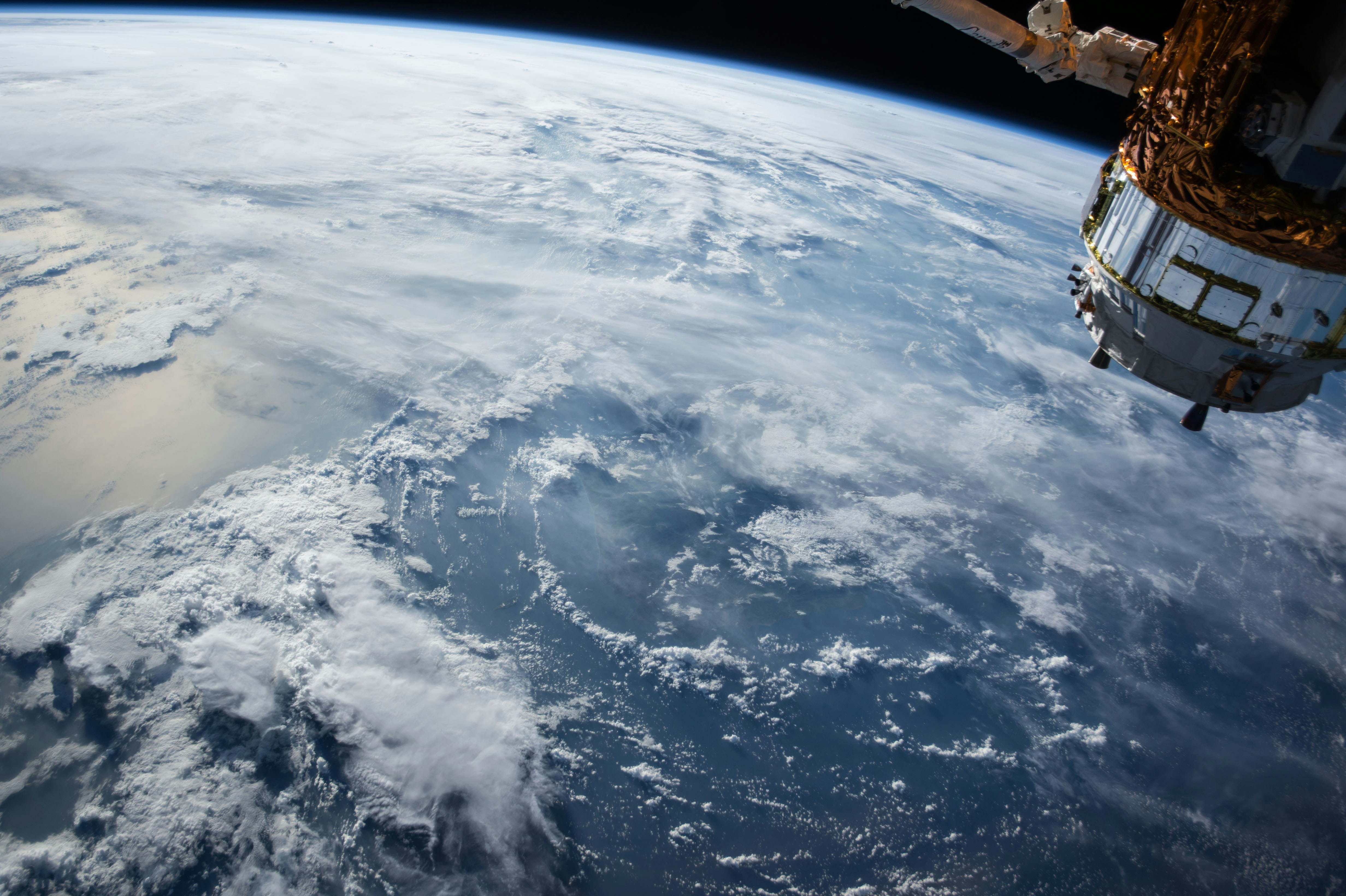
This "gravitational ghost" haunts our movements even after we’ve spent time in space. Experiments show that when people in weightlessness are asked to intercept a moving object, they often move their hands as if the object is being pulled downward by gravity, even though it is moving in a straight line. Their eyes see the truth, but their internal physics engine is still stuck on the ground. This suggests that our sense of "down" is so deeply hardwired into our neural circuitry that we can't just turn it off with a flip of a switch. It takes time, practice, and a lot of bumped heads to rewrite those internal lines of code.
Furthermore, the way we perceive consequences plays a massive role in how we adapt. If an astronaut is performing a task where a mistake leads to a big "oops," they become much more cautious, and their movements become more rigid. They rely more heavily on visual feedback because they no longer trust their "gut feeling" of where their limbs are in space. In the absence of the constant tug of gravity on our inner ears and muscles, our body's internal GPS gets a "signal lost" notification. To compensate, we have to use our eyes to double-check everything, which is why tasks that take seconds on Earth can take minutes in the void.
The lessons learned from these wobbly experiments aren't just for people in tin cans orbiting the Earth. They tell us a lot about how we learn and adapt to any new environment. Whether it's a person learning to walk again after an injury or a surgeon using a robotic arm, the brain is constantly weighing the risks of a mistake against its internal map of how the world should work. We are essentially biological computers that are constantly recalibrating ourselves to match the physics of our surroundings.
So, the next time you trip over a rug or drop your keys, don't feel too bad. Your brain is simply doing its best to manage the complex physics of a high-gravity world. And if you ever find yourself floating in a space station, remember to be patient with your "Earth OS." It might take a while for your brain to realize that, for now, the rules of the game have changed, and "down" is wherever you decide it to be. Until then, just try not to spill your space-juice!


No comments:
Post a Comment