Ever wondered how your noggin manages to pick out your best friend’s face in a crowded subway station or instantly recognize your favorite barista before they’ve even finished their "next in line" shout? It feels like magic, doesn’t it? One second you’re looking at a sea of random features, and the next, your brain screams, "Aha! That’s Dave!" Well, it turns out it’s not magic—it’s a highly sophisticated, high-speed neural party happening inside your skull. Two brilliant scientific explorers, Doris Tsao and Winrich Freiwald, have been acting as the ultimate paparazzi for the brain’s facial recognition system, and their hard work just landed them one of the most prestigious trophies in the world of neuroscience.
For decades, the way we process faces was a bit of a "black box" mystery. Scientists knew we were good at it, but they didn’t quite know the "where" or the "how." Enter our dynamic duo. Tsao and Freiwald decided to go on a deep-dive expedition into the brain to find the specific headquarters responsible for facial identification. Think of them as cartographers mapping out a previously uncharted island. What they found wasn’t just a single "face spot," but an entire network of specialized zones that they aptly named "face patches."
To get these results, they used some pretty high-tech gadgets, including functional magnetic resonance imaging (fMRI). By showing subjects different images—ranging from crunchy apples to shiny cars and, of course, human faces—they watched to see which parts of the brain started glowing with excitement. Like a neon sign at a 24-hour diner, the face patches lit up only when a face was in view. It was a true "Eureka!" moment that proved the brain has a dedicated VIP section specifically for social recognition. These six little patches work together like a well-oiled machine, passing information back and forth to build a complete picture of who we are looking at.
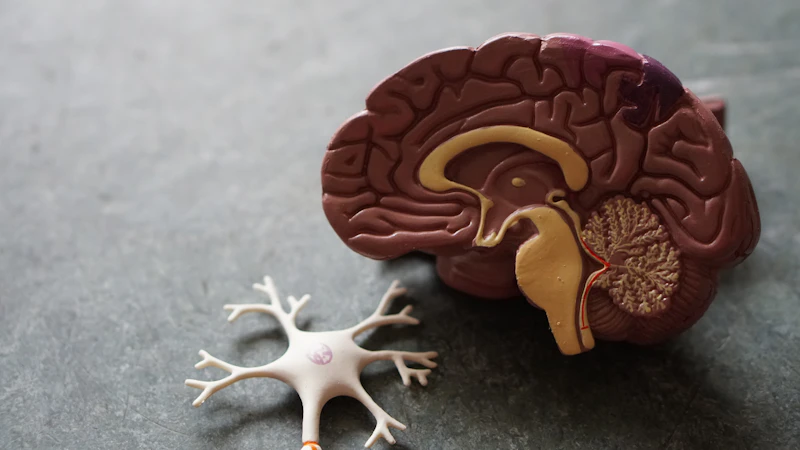
But they didn’t stop at just finding the locations. They wanted to crack the secret code of the neurons themselves. It’s one thing to find the room where the party is happening; it’s another thing entirely to understand the language everyone is speaking. By zooming in on individual nerve cells, they discovered that these neurons are incredibly picky. Some cells only care about the distance between your eyes, while others are obsessed with the shape of your hairline or the curve of your nose. It’s like a digital assembly line where every cell contributes one tiny piece of the puzzle until your brain finally prints out the identity of the person in front of you.
This research isn’t just about satisfying our curiosity about why we’re so good at spotting celebrities in the wild. It has huge implications for the real world, which is why they were awarded the International Prize for Translational Neuroscience. This prize is a big deal—it’s basically the "Lifetime Achievement Award" for people who take complex laboratory science and turn it into something that can actually help people. By understanding how the "face-recognition engine" works, doctors and researchers can better understand conditions like prosopagnosia, more commonly known as face blindness, where people can’t recognize their own family members or even their own reflection.
The work of Tsao and Freiwald also sheds light on how we navigate the social world. Humans are inherently social creatures, and being able to read emotions and identities is the glue that holds our society together. When this system isn't firing on all cylinders—which can happen in various neurological conditions or after a stroke—the world can become a very confusing and isolating place. By pinpointing exactly how the brain decodes these social signals, we are one step closer to developing therapies and interventions that could help "rewire" or support these vital pathways.
So, the next time you wave at a neighbor or smile at a familiar face, take a quick second to thank your internal team of face-patch neurons. They are working at lightning speed, crunching data and cross-referencing memories, all so you don't accidentally walk past your mom without saying hello. And let’s give a round of applause to the scientists who spent years in the lab, staring at brain scans and data points, just to help us understand the beautiful, complex machinery that makes us human. It’s a win for science, a win for medicine, and a win for every face in the crowd!
As we look toward the future, the map created by these two pioneers will serve as a guide for the next generation of brain explorers. There is still so much to learn about the gray matter between our ears, but thanks to this award-winning duo, the mystery of the face is a little less mysterious. They’ve proven that with enough patience, the right tools, and a bit of scientific curiosity, we can unlock even the most complex secrets of the human mind. Who knows what they’ll find next? Maybe they’ll discover the part of the brain that tells us why we can never remember where we left our car keys!


No comments:
Post a Comment